Last month, I worked with an Instacart shopper from Mississauga who’d been delivering for two years. She thought Instacart handled her taxes, so she never filed a return. Then the CRA finally sent her a notice, she owed over $7,000 in back taxes, penalties and interest.
She said, “But I never got a T4.”
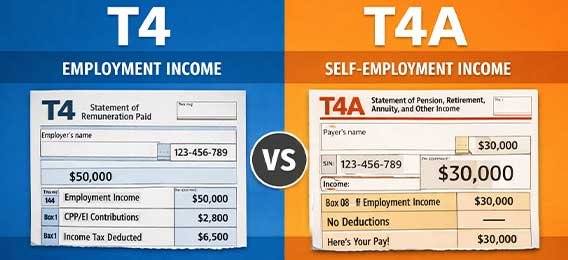
Here’s what she missed: Instacart shoppers get T4A slips, not T4s. The CRA counts you as self-employed. And even if you don’t get a tax slip at all, you still have to report every dollar you make. That’s the law.
Whether you’re a full-time Instacart shopper earning $50,000+ or someone doing a few orders on weekends for extra cash, this guide breaks down exactly how to file your Instacart taxes in Canada. I’ll explain what you can claim, what forms you need and how to steer clear of costly mistakes.
How to Know If You Need to File Instacart Taxes in Canada
Let’s start with the foundation that changes everything about how you file.
Am I an Employee or Self-Employed?
As an Instacart driver, your income tax is not deducted at source. Instacart collects their commission from each order you complete, transfers the remaining amount to your bank account “gross”, meaning no tax, CPP or EI has been taken off.
You are solely responsible for calculating your income, tracking your expenses and paying your tax bill. You can’t skip this. The law says every Canadian resident has to report all their income, no matter how small.
How the CRA Classifies Instacart Income for Taxes?
If you do something with the intention of making a profit, it is generally considered a business according to both the Canada Revenue Agency and Revenu Québec. It doesn’t matter whether you deliver groceries full-time or only a few hours on weekends. If you’re earning income from Instacart, you are considered self-employed and operating a business for tax purposes.
Can I Work a Full-Time Job and Deliver for Instacart?
Absolutely. Many individuals continue with their day jobs while also doing Instacart deliveries in the evenings or on weekends.
- You file your T4 job as usual.
- You file your Instacart income as Business Income on Form T2125.
Your full-time job and your Instacart income are reported separately on your tax return, but combined to determine your Total Taxable Income.
What Tax Documents Do I Need as an Instacart Driver
The most common confusion for new shoppers is the tax slip. Here is the difference:
T4A vs T4 for Instacart Drivers
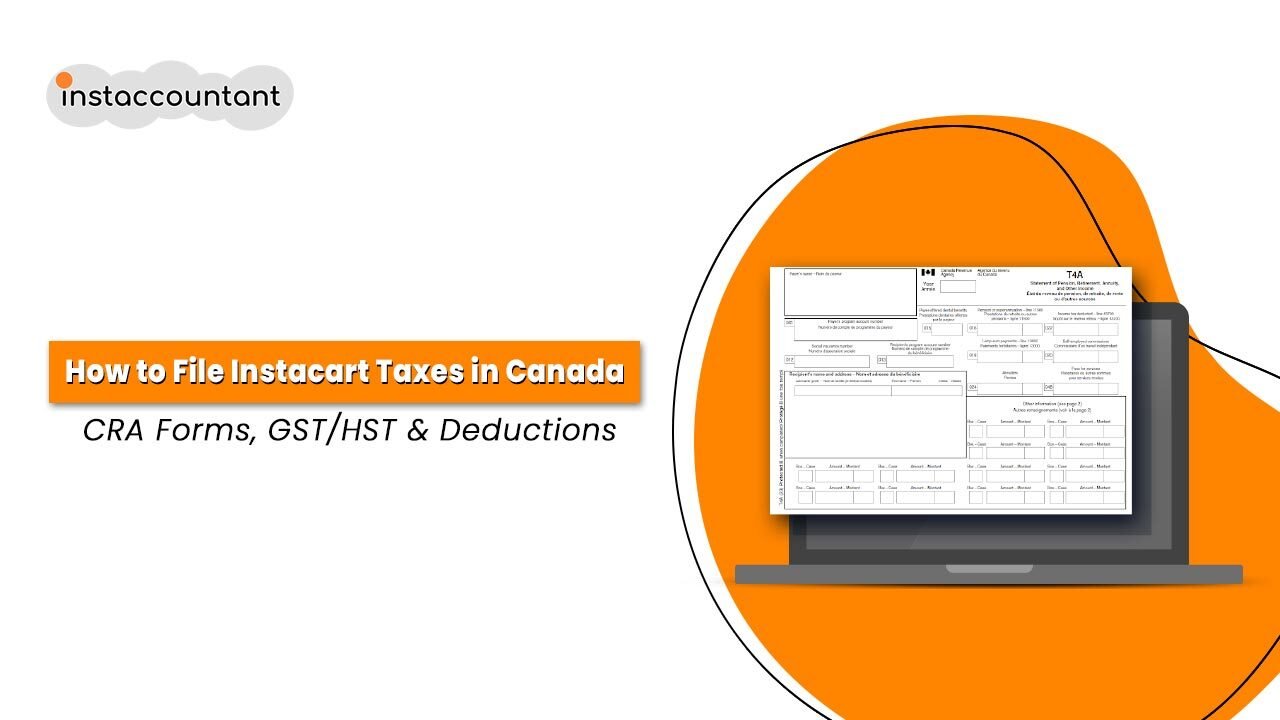
If you deliver for Instacart, you’ll get a T4A slip from Instacart after December 31st and it should reach you by mid-February. The T4A slip (Statement of Pension, Retirement, Annuity and Other Income) shows your total gross earnings from Instacart for the tax year.
| Feature | T4 Slip (Employee) | T4A Slip (Instacart Shopper) |
|---|---|---|
| Status | Employee | Self-Employed / Contractor |
| Tax Deducted at Source? | Yes | No – You calculate & pay yourself |
| CPP Deducted? | Yes (Employee portion only) | You pay both employee + employer portions |
| EI Deducted? | Yes | No – You are not eligible |
| Expense Claims Allowed? | None | Yes – Vehicle, gas, phone, delivery supplies |
Your T4A lists your total earnings from Instacart, including all batches completed, tips received, and any bonuses or incentives earned. However, it won’t show your business expenses or the net amount you actually earned after accounting for gas, vehicle maintenance and other costs.
What to Do If You Don’t Receive a T4A From Instacart?
Some Instacart shoppers report not receiving tax slips, especially if they didn’t earn much. This doesn’t mean you’re exempt from reporting the income.
Track your earnings through:
- Your Instacart shopper app earnings history
- Bank deposit records showing payments from Instacart
- Weekly payment summaries from the app
- Your own spreadsheet or use a tracking app like Zoombooks
Even if you made just $500 from Instacart last year, you have to report it on your tax return.
What Tax Forms Do Instacart Shoppers Need in Canada
Filing as an Instacart shopper requires different forms than traditional employment income.
1. Form T2125 (Statement of Business or Professional Activities)
This is where you report Instacart income and any expenses. Attach it to your regular T1 tax return. Form T2125 is where you figure out your net business income.
Form T2125 includes:
- Part 1 – Identification: Your info, business name (your own name works), business address and business number (if you’ve got one for GST/HST).
- Part 2 – Business Activity: Use industry code 492210 (local messengers and delivery), describe what you do (grocery delivery services” or “personal shopper), and your business start date.
- Part 3 – Business Income: Total business income from your T4A or your own records, including tips and bonuses.
- Part 4 – Business Expenses: All your deductible business expenses, sorted by type (vehicle, gas, maintenance, phone) and so on.
- Part 5 – Net Income Calculation: You figure out your net business income by taking your gross income and subtracting all your expenses. That final number goes straight onto your T1 General tax return.
2. Your T1 General Income Tax and Benefit Return
You attach the T2125 form to your main tax return, the T1 General. The net business income from your T2125 gets added to all your other income for the year (employment, investments, etc.) to figure out your total taxable income.
3. Extra Steps for Quebec Residents
If you operate in Quebec, you also need to fill out Form TP-80-V (Business or Professional Income and Expenses) for your provincial return with Revenu Québec. This is on top of the federal T2125.
Complete List of Tax Deductions for Instacart Shoppers
This is where you can shrink your tax bill, big time. If you don’t track your expenses, you’re basically choosing to pay the government more than you have to.
1. Vehicle Expenses
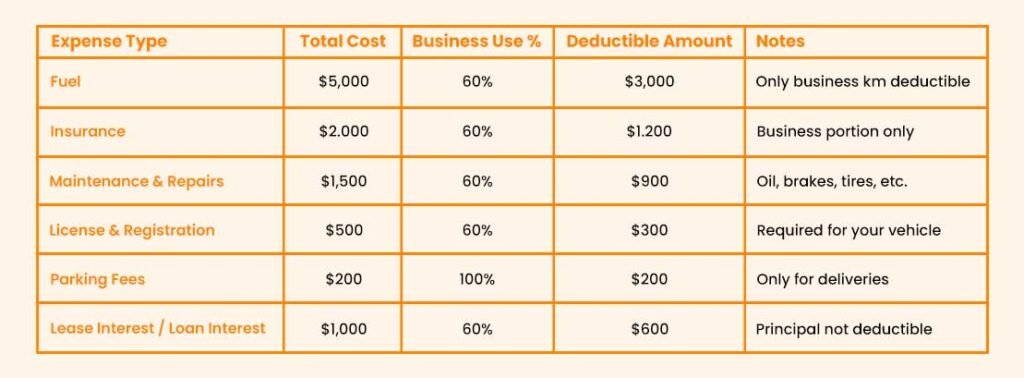
For most Instacart shoppers, vehicle expenses make up 50-70% of total deductions. Your car is your primary business tool.
What counts as deductible vehicle expenses:
- Fuel (gas, diesel, or electricity if you drive an EV)
- Oil changes and regular maintenance
- Repairs (brakes, tires, engine work, transmission)
- Vehicle insurance (business portion)
- License and registration fees
- Car washes and detailing
- Parking fees incurred during deliveries
- Lease payments or vehicle loan interest (not principal)
- Capital Cost Allowance (depreciation)
You can only claim the portion of your vehicle expenses that matches your business use.
Don’t skip the mileage log. If you get audited and can’t prove your business kilometres, the CRA can throw out your vehicle deductions completely.
2. Cell Phone and Data Plan
You can write off the business part of your cell phone bill and internet data plan. Save your phone expenses as proof.
3. Delivery Equipment and Supplies
These are 100% deductible business expenses:
- Insulated delivery bags (hot and cold bags)
- Coolers for temperature-sensitive items
- Hand trucks or carts for heavy orders
- Phone mounts and chargers for your vehicle
- Sanitizer and cleaning supplies
- Masks, gloves, and other protective equipment
- Reusable shopping bags
Keep all receipts for these purchases.
4. Instacart Service Fees
Instacart takes a service fee or commission on every batch you complete. Deduct these fees as business expenses on your T2125.
5. Bank Fees and Transaction Costs
If your business or personal account charges fees for Instacart-related deposits or transactions, you can write those off too.
6. Professional Fees
Anything you pay to accountants, bookkeepers, or tax prep services for your Instacart taxes is fully deductible.
What is NOT Deductible?
- Traffic Tickets: The CRA does not allow deductions for fines or penalties.
- Your Lunch: Food you eat while working is considered a personal expense.
Do I Need to Register for GST/HST as an Instacart Driver?
This is one of the most misunderstood aspects of Instacart taxes.
The CRA $30,000 Threshold Rule
If your gross Instacart income (before expenses) exceeds $30,000 over four consecutive calendar quarters or in a single calendar quarter, you must register for a GST/HST account with the CRA.
Calendar quarters are:
- Q1: January – March
- Q2: April – June
- Q3: July – September
- Q4: October – December
For example, if you earn:
- Q2 2025: $8,000
- Q3 2025: $9,000
- Q4 2025: $7,000
- Q1 2026: $8,000
That adds up to $32,000 over four quarters. You’ve crossed the $30,000 line, so you have to register for GST/HST within 29 days of the end of Q1 2026.
Do You Charge GST/HST to Customers?
No. Instacart handles all the invoicing and GST/HST collection from customers. You don’t bill customers for GST/HST directly.
Should You Register Voluntarily?
A lot of Instacart shoppers choose to register for GST/HST even if they’re under $30,000. Why? To claim Input Tax Credits (ITCs). Basically, you get refunds on GST/HST you paid for business stuff, like new tires or that $1,200 iPhone for work.
How Much CPP Do You Pay as a Self-Employed Instacart Driver?
Since you don’t have an employer, you pay both portions of the Canada Pension Plan (CPP).
| Net Self-Employment Income | Basic Exemption | Pensionable Earnings | CPP Rate | CPP Contribution |
|---|---|---|---|---|
| $25,000 | $3,500 | $21,500 | 11.9% | $2,558.50 |
| $50,000 | $3,500 | $46,500 | 11.9% | $5,533.50 |
| $70,000 | $3,500 | $66,500 | 11.9% | $7,903.50 |
Your tax software (or your accountant) calculates this for you when you file your T1. You can deduct half (the employer portion) on your tax return.
How to File Your Instacart Taxes Step by Step
Let’s break down how to actually file your taxes as an Instacart shopper. Don’t worry, it’s more doable than it seems.
Step 1: Gather Your Documents
Collect everything you need before you start:
Income Documents:
- T4A slip from Instacart, if they gave you one
- Bank statements showing Instacart deposits
- Earnings summary from your Instacart shopper app
- Any records of tips and bonuses you got
Expense Records:
- Receipts for fuel purchases
- Bills for car maintenance or repairs
- Insurance policy documents showing premium amounts
- Cell phone bills (especially if you use your phone for work)
- Receipts for delivery bags and equipment
- Bank statements showing any business-related transactions
Mileage Records:
- Your complete mileage log for the year
- Odometer reading from January 1
- Odometer reading from December 31
- The total kilometres you drove for Instacart
Step 2: Calculate Your Business Use Percentage
Review your mileage log and calculate:
- Total kilometres driven during the year
- Business kilometres driven for Instacart
- Business use percentage (business ÷ total)
You’ll use this percentage when claiming car expenses.
Step 3: Fill Out Form T2125
Enter Your Business Information:
- Industry code: 492210 (local messengers and delivery)
- Your business name, address and start date
Report Your Income:
- Enter gross Instacart income from your T4A
- Add any tips or bonuses not already on that slip
Claim Your Expenses:
- Vehicle expenses (applying your business use percentage)
- Cell phone and internet costs
- Delivery supplies and bags
- Instacart service fees
- Any professional fees or other business expenses
Calculate your net business income: Gross income minus expenses.
Step 4: Calculate CPP Contributions
Your CPP contributions are calculated on Schedule 8 based on your net self-employment income, ensuring you pay both your portion and the employer-equivalent portion correctly.
Step 6: Review and File
Double-check everything, make sure you’ve claimed all the deductions you’re eligible for and file through NETFILE or an accountant for the fastest processing and refund (if applicable).
When Are Instacart Tax Filing Deadlines in Canada?
- Filing Deadline: You need to file your taxes by June 15
- Payment Deadline: But if you owe money, you have to pay by April 30 to avoid interest
So, even though you can file until June 15, pay any balance by April 30. The CRA starts charging interest on unpaid amounts after April 30, even if you file on time.
Common Instacart Tax Mistakes to Avoid in Canada
- 1. Not Filing Due to Low Income: Even if you made just $100 with Instacart, you need to report it. Not doing so just creates problems for you later.
- 2. Claiming 100% Vehicle Use: Unless you have a second car used exclusively for deliveries, claiming 100% of your vehicle expenses is a red flag for the CRA.
- 3. Not Reporting Tips: Cash tips are fully taxable. The CRA expects all tips to be included in your gross income, even if they weren’t tracked digitally.
- 4. Ignoring the $30,000 GST/HST Threshold: If you make over $30,000 in a year, you have to register for GST/HST. If you don’t, the CRA can hit you with penalties and back taxes.
How to Catch Up on Unfiled Instacart Taxes in Canada
If you’ve skipped filing for a few years, don’t wait any longer.
1. The CRA Keeps Track
The longer you wait, the more expensive it becomes. Interest and penalties compound. The CRA can issue arbitrary assessments based on your T4A income without accounting for your expenses, significantly inflating what you owe.
2. File All Missing Years
File tax returns for every year you earned Instacart income, starting with the most recent year and working backward. Most gig workers discover they actually owe less than they feared once deductions are properly claimed.
You can file returns going back up to 10 years and still claim refunds (if you’re owed money).
2026 CRA Updates for Instacart Shoppers
- Instacart and other platforms report your earnings to the CRA
- The CRA cross-references this with your filed returns
- Non-filers are being identified and contacted more frequently
- Audits of gig workers are increasing
Final Thoughts
Filing Instacart taxes in Canada doesn’t have to be overwhelming.
The biggest mistake you can make is ignoring your tax obligations and hoping the CRA doesn’t notice. They will. Instacart reports your earnings directly to the CRA, and cross-referencing is automated.
The second biggest mistake is overpaying taxes because you didn’t claim deductions you’re entitled to. Every legitimate business expense reduces your tax bill. Track them all.
Start implementing the systems outlined in this guide today.
Remember: You’re not just an Instacart shopper. You’re a self-employed business owner. Treat your taxes like a real business owner and they’ll be way less scary.